The short answer
Automotive business finance in NZ funds workshop equipment, hoists, diagnostic and ADAS tools, tyre stock, paint booths and premises upgrades for mechanics, panel beaters, WoF stations and tyre shops. LoansOne arranges unsecured loans from $20,000 to $500,000 on cash flow, plus 1st or 2nd mortgages from $20,000 to $500,000. Business use only.
What cash flow pressures do NZ automotive businesses face?
Automotive workshops have always run on volume: a steady flow of services, WoFs, tyres and repairs through the bays. That model is shifting, and the equipment needed to keep up isn’t cheap.
The pressure points we see across mechanics, panel beaters, testing stations and tyre shops:
- Fewer WoF inspections. From 1 November 2026, brand-new light vehicles go four years before their next WoF, and many newer vehicles then move to two-yearly inspections up to 14 years old, with a second group of vehicles joining from 1 November 2027. The oldest vehicles move from six-monthly to annual. For workshops that rely on WoF traffic to bring in servicing and repair work, that’s a real change in foot traffic.
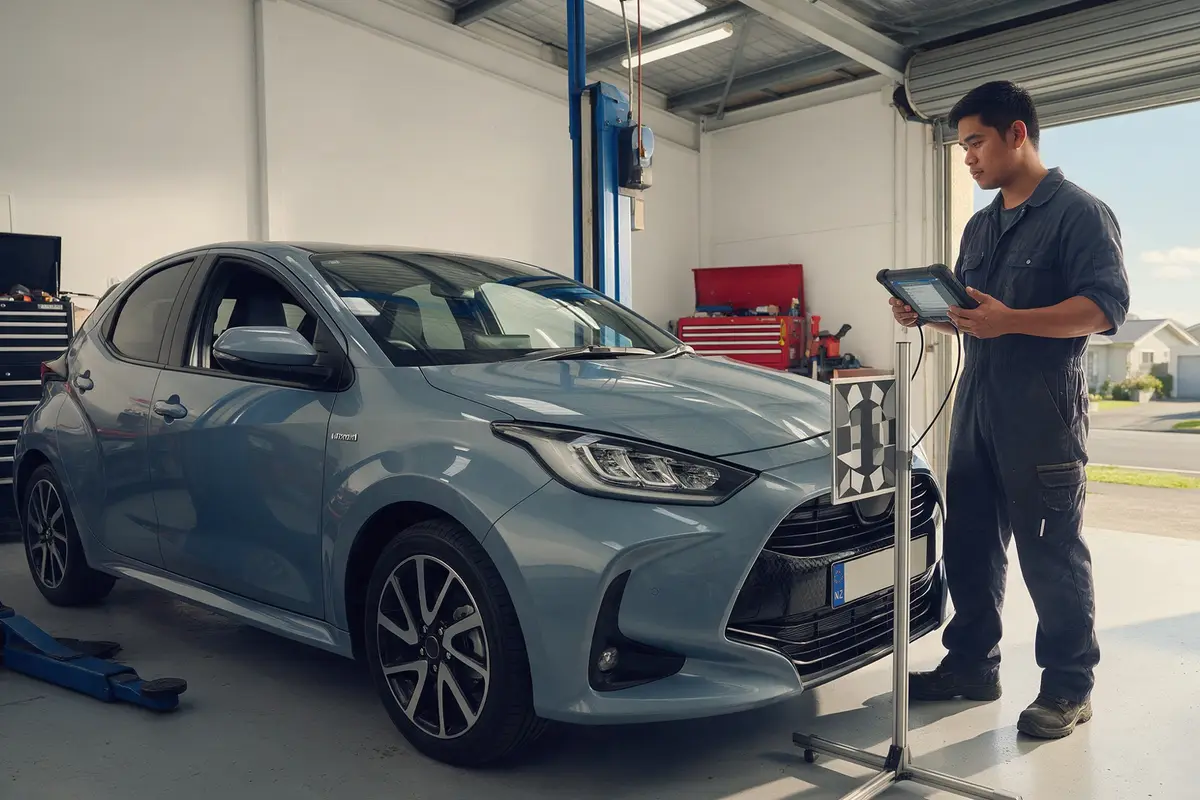
- ADAS is now part of the job. WoF inspections will include checks of warning lights for advanced driver assistance systems such as automatic emergency braking and lane keep assist. Repairing and recalibrating those systems needs scanners, targets and training.
- Hybrids and EVs. More of the fleet needs specialist tools, insulated equipment and trained staff.
- Parts and stock. Tyre shops and parts-heavy workshops carry significant stock, and prices move with the exchange rate.
- Waiting on insurers. Panel beaters fund parts, paint and labour well before insurer payments arrive.
What do automotive businesses usually fund?
Workshop equipment. Two-post and four-post hoists, wheel aligners, tyre changers and balancers, brake testers, air conditioning machines and diagnostic scanners. Most of this suits asset finance, where the equipment secures the loan.
ADAS and EV capability. Calibration rigs and targets, high-voltage safety gear, software subscriptions and training.
Panel and paint. Spray booths, measuring systems, welders and dust extraction for collision repairers.
Premises. Extra bays, a mezzanine, better drainage, a new customer area, or buying the building you lease.
Stock and working capital. Tyre stock ahead of winter, parts inventory and wages while insurer or fleet-account payments catch up.
Commercial vehicles. A tow truck, service ute or courtesy van used in the business. See equipment and vehicle finance for business vehicles. LoansOne doesn’t arrange personal car loans.
Which LoansOne options fit a workshop or garage?
| Need | Usually fits | What the lender relies on |
|---|---|---|
| Hoist, aligner, scanner, spray booth | Equipment or asset finance | The equipment |
| Equipment plus install, concrete and wiring | Unsecured loan, $20,000 to $500,000 | Trading cash flow |
| Tyre and parts stock, insurer payment gaps | Cash flow or working capital loan | Regular deposits |
| Buying the workshop building or expanding | 1st or 2nd mortgage, $20,000 to $500,000 | The property; no financials needed |
| Credit history issues | 1st or 2nd mortgage | Property; bad credit OK |
If you’re weighing up equipment finance against a business loan for a single machine, our asset finance vs unsecured loan comparison sets out when each makes sense.
How might a WoF station adapt? An illustrative scenario
This is an illustrative example, not a real client.
A family-owned workshop in Hamilton has built its business on WoFs. Inspections bring cars through the door, and a good share of those turn into brake jobs, tyres and services. With the WoF changes coming, the owners expect fewer inspection visits from newer cars and want to make up the work through servicing and ADAS repairs.
Their plan:
- A second two-post hoist so they can take more servicing bookings.
- An ADAS calibration kit and a better diagnostic scanner.
- Training for two technicians on hybrid and EV work.
- Building work to install the hoist and upgrade the workshop’s power supply.
The hoist and calibration kit go on equipment finance. The training, building work and electrical upgrade sit on an unsecured business loan, assessed on two years of steady bank statements. The workshop is ready before the new rules start, rather than reacting after its booking sheet thins out.
Use the business loan calculator to check repayments against the extra work the new gear can bring in.

Should you buy workshop equipment new or used?
Used hoists, tyre machines and spray booths come up for sale often, especially when workshops close or upgrade. Buying used can save money up front. New gear brings warranties, the latest software and, for diagnostic and ADAS tools, compatibility with newer vehicles. A few things to weigh:
- Tax. Under Investment Boost, businesses can claim 20% of the cost of new, or new to New Zealand, depreciable assets acquired from 22 May 2025 as an immediate deduction, then depreciate the rest as usual. Second-hand equipment already used in New Zealand doesn’t qualify. Your accountant can confirm how it applies.
- Finance. Equipment finance works for both new and used gear, including private sales, but lenders look harder at the age and condition of older items.
- Install costs. A used hoist still needs certification, a suitable slab and installation. Those costs suit an unsecured business loan rather than the equipment finance itself.
- Software and subscriptions. Diagnostic tools often need ongoing software licences. Build them into your monthly budget.
Either way, get written quotes or a seller’s invoice before you apply. It speeds up the lender’s assessment and gives a clear picture of what the money is for.
What helps an automotive business get approved?
Lenders like workshops with steady deposits, a spread of customers and fleet accounts, and equipment that holds value. They’re more cautious when the account shows dishonours or when one fleet customer makes up most of the income.
- Have three to six months of business bank statements ready.
- Get supplier quotes for the equipment and any install work.
- Explain how the investment brings in more work.
- Flag any IRD arrears early. A working capital loan can sometimes tidy those up at the same time.
Every loan is priced on your circumstances: security, trading history, credit history and the term. LoansOne works to get the sharpest rate available for your situation, and matches you to the right lender instead of sending your details everywhere.
Next step
Ready to equip the workshop for what’s coming? Apply in about 30 seconds. It’s free and doesn’t mark your credit file. Or call 09-888 5252 to talk it through with an expert.