
The short answer
A secured business loan is backed by property or assets the lender registers an interest over, so it usually allows larger amounts, sharper pricing and more leeway on credit and records. An unsecured business loan needs no property and is assessed mainly on your bank statements and trading, making it quick and simple when cash flow is steady.
What is the difference between a secured and an unsecured business loan?
A secured business loan is backed by something the lender can register an interest over and sell if the loan isn’t repaid. In New Zealand that’s usually property, sometimes vehicles, machinery or other business assets. An unsecured business loan has no specific asset behind it. The lender relies on your trading cash flow, your credit history and, usually, a personal guarantee from the directors.
That one difference flows through everything else: how much you can borrow, how fast it settles, what paperwork you need and what you’re putting on the line. Neither is better in general. Each wins in different situations, and choosing the wrong one costs time, money or sleep.
Secured vs unsecured business loans side by side
| Unsecured business loan | Secured business loan (1st or 2nd mortgage) | |
|---|---|---|
| What backs the loan | Trading cash flow, credit history, personal guarantee | Registered mortgage over property |
| Amounts through LoansOne | $20,000 to $500,000 | $20,000 to $500,000 |
| Property needed? | No real estate security in most cases | Yes, residential or commercial property with equity |
| What the lender studies most | Bank statements and trading pattern | Property value and existing debt on the title |
| Financial records | Recent bank statements usually needed | No cash flow or financial records needed |
| Credit history | Carries more weight | Bad credit OK |
| Speed | Very fast when statements are clean | Fast, with valuation and legal steps added |
| Pricing | Reflects the lender’s higher risk | Security usually helps sharpen pricing |
| What’s at risk if it goes wrong | Personal guarantee, future borrowing | The property |
What counts as security for a business loan in New Zealand?
“Security” covers more than a mortgage on the house. The main forms you’ll meet:
- Registered mortgage over land. Recorded against the property’s title with LINZ. A first mortgage ranks ahead of every other lender. A second mortgage sits behind the first and is paid out after it.
- Caveat. A notice lodged on the title that stops the property being sold or refinanced without the lender’s interest being dealt with. Quicker to put in place than a full mortgage. See caveat loans.
- Security interest on the PPSR. For vehicles, machinery and other personal property, lenders register on the Personal Property Securities Register. This is how asset finance is usually secured.
- General security agreement. Some lenders take a charge over all present and future business assets, also registered on the PPSR.
- Personal guarantee. Not security over a particular asset, but a promise from directors to repay personally if the business can’t.
So in business lending, “unsecured” normally means no property is used as security. It rarely means no recourse at all. Read the agreement so you know exactly what’s being registered and guaranteed.
When does an unsecured business loan win?
An unsecured loan is the natural fit when:
- You don’t own property, or don’t want to use it. Renters, younger businesses with good turnover, and owners who’d rather keep the family home well out of it.
- Your banking is clean and steady. Regular deposits and a tidy account make assessment quick.
- The need is specific and fairly short. Stock for the Christmas rush, a marketing push, a GST bill, a deposit on a new contract.
- You want to leave your home loan alone. No change to your bank mortgage and no conversation with your bank.
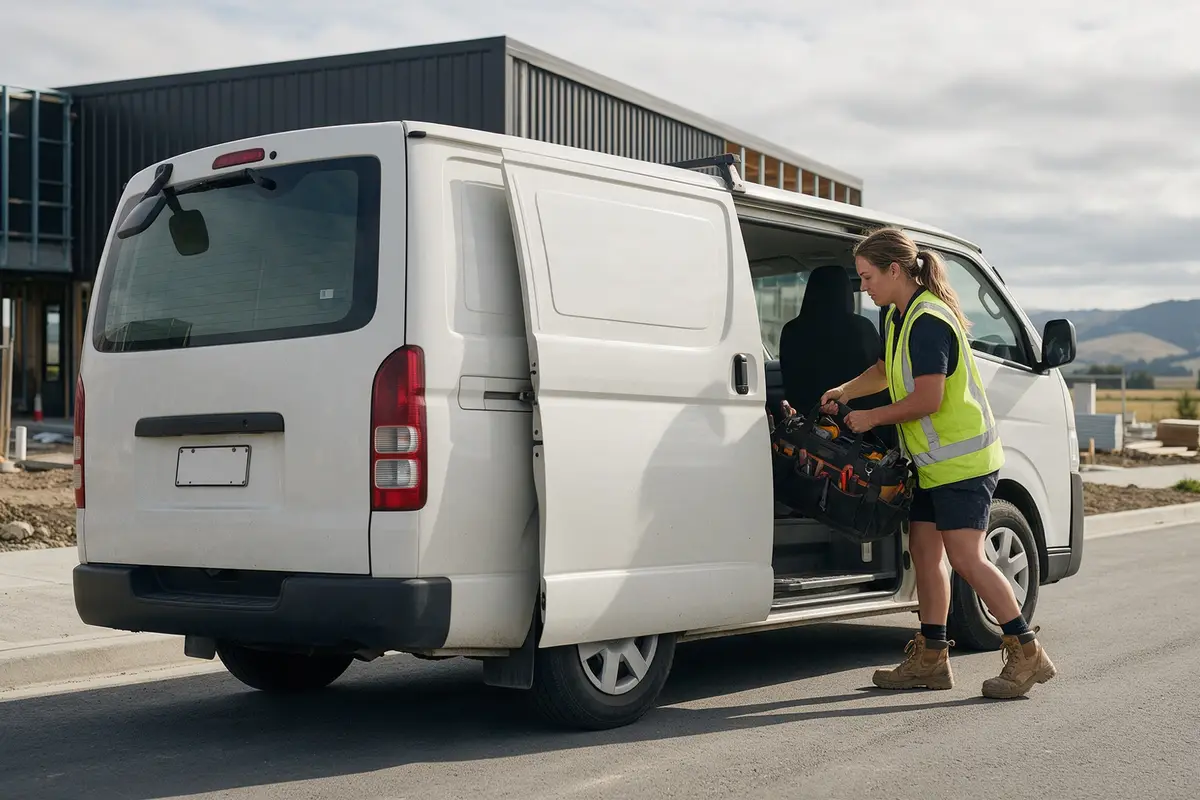
Take a Christchurch electrical contractor with steady invoicing across commercial fit-outs. They need $80,000 for a second van, tools and extra wages while a large project ramps up, and they rent their home. An unsecured business loan assessed on their bank statements gets them moving without any property involved.
When does a secured business loan win?
Security changes the conversation when:
- You need more than your cash flow alone would support. Equity can back borrowing that trading figures can’t.
- Your financials are behind or messy. LoansOne’s 1st and 2nd mortgages need no cash flow or financial records. The property does the heavy lifting.
- Your credit file has marks on it. Defaults or arrears matter less when there’s solid equity. Bad credit is OK.
- Your trading is lumpy or seasonal. A strong year followed by a tough one makes cash flow lenders cautious. Equity doesn’t care about one bad quarter.
- You want the sharpest pricing available. Lower risk for the lender generally means a better rate.
Picture a Nelson boat builder coming out of a slow winter with some IRD arrears and accounts two years behind. The bank won’t look at it. But the owner has solid equity in a house in Richmond. A second mortgage for $150,000 behind the existing bank home loan clears the IRD debt and buys materials for a spring order, while the bank’s first mortgage stays in place.
Is a secured or unsecured business loan cheaper?
Usually secured, because the lender has something to fall back on. But cheaper has to mean lower total cost, not just a lower rate. A property-secured loan brings valuation and legal costs, and registering and later discharging a mortgage takes work. For a smaller loan you’ll clear within months, an unsecured loan can come out competitive once those costs are counted.
Every loan is priced on your individual circumstances. We don’t publish rates, because a “from” rate tells you nothing about what you’d actually pay. We work to get the sharpest rate available for your situation. Once you have offers in hand, the compare loan offers tool puts the total cost of each side by side.
What are the risks of each type?
Unsecured loans: A personal guarantee means directors can be pursued personally if the business doesn’t repay. Repayments are often frequent, weekly or sometimes daily for certain products, which needs steady money coming in.
Secured loans: The property is at risk if you default. With a second mortgage, two lenders sit on the title, and both need to be kept informed and paid. Have a clear repayment plan, whether that’s trading income, a sale or a refinance back to the bank.
Neither type is risky in itself. The risk comes from borrowing without a clear way to repay.
How much can you borrow with each?
The two types are sized in completely different ways. An unsecured lender looks at what flows through your business account: regular deposits, the pattern across recent months and the repayments you already carry. The loan has to sit comfortably inside that cash flow.
A secured lender starts with the property. It takes the value, subtracts what’s already owed on the title and lends within its own limit on the remaining equity. Your trading matters far less.
That’s why someone with modest turnover but strong equity can often borrow more on a second mortgage. Our guide on how much business loan you can get walks through both methods with worked examples.

Can you use both secured and unsecured finance?
Yes, and plenty of businesses do. A common setup is asset finance for a ute or excavator alongside an unsecured loan for working capital. Another is a second mortgage for a large one-off need, such as clearing tax arrears or buying out a partner, while a smaller cash flow facility handles day-to-day swings.
The principle is simple: match each type of money to each type of need. Property-backed money for big or long needs, cash flow money for short trading needs, asset-backed money for the asset itself. If you’re unsure of the right mix, the loan matcher gives you a starting point in a couple of minutes.
Which should you choose? A quick decision guide
Choose unsecured if:
- you don’t have property equity, or prefer not to use it
- your bank statements show steady trading
- you need $20,000 to $500,000 quickly without involving property
Choose secured if:
- you own property with useful equity
- your records are behind or your credit has marks
- you want the sharpest pricing on a larger amount, or your trading is seasonal
Still on the fence? That’s exactly what the expert review is for. We look at the whole picture and match you to the lender and loan type that fits, rather than sending your details to every lender in the country.
Next step
Tell us what the money is for and whether you own property, and we’ll point you to the right type of loan and the right lender. Apply in about 30 seconds, and starting an enquiry won’t mark your credit file. Or call 09-888 5252 and talk to an expert today.