The short answer
How much business loan you can get in NZ depends on what the lender is relying on. Unsecured loans are sized on the cash flow in your business bank statements after existing commitments. Property-secured loans are sized on the equity left after existing mortgages. Asset finance is sized on the asset's value. LoansOne arranges $20,000 to $500,000.
How do lenders decide how much you can borrow?
Every business loan is sized using one main yardstick, and which one applies depends on what the lender is relying on to get repaid:
- Cash flow. For unsecured loans, the lender relies on your trading. The question is how much repayment your business can comfortably carry.
- Equity. For 1st and 2nd mortgages, the lender relies on property. The question is how much room there is on the title.
- Asset value. For asset finance, the lender relies on the vehicle or machine. The question is what the asset is worth now and over the loan’s life.
On top of that, every lender weighs your credit history, IRD position, existing debts and the purpose of the loan. Understanding the main yardstick, though, gets you most of the way to a realistic number.
Which yardstick applies to which loan?
| Loan type | What sets the limit | What helps you borrow more | Range through LoansOne |
|---|---|---|---|
| Unsecured business loan | Consistent surplus cash flow in bank statements | Steady deposits, low existing commitments, no dishonours | $20,000 to $500,000 |
| 1st or 2nd mortgage for business | Equity in the property after existing mortgages | Higher property value, lower existing mortgage | $20,000 to $500,000 |
| Asset finance | Value and age of the asset | Newer assets, assets that hold value, a deposit or trade-in | Depends on the asset |
How much can you borrow on an unsecured business loan?
An unsecured business loan is sized from your business bank statements. Lenders typically look at:
- Regular deposits. How much comes in, and how evenly.
- Trend. Is turnover steady, growing or slipping?
- Outgoings. Wages, rent, suppliers, GST, PAYE and existing loan repayments.
- Behaviour. Dishonours, unarranged overdrafts or frequent transfers to personal accounts.
From that picture, the lender works out a reliable monthly surplus and sizes the loan so the new repayment uses only part of it. They want a cushion for a slow month, a late-paying client or an unexpected repair.
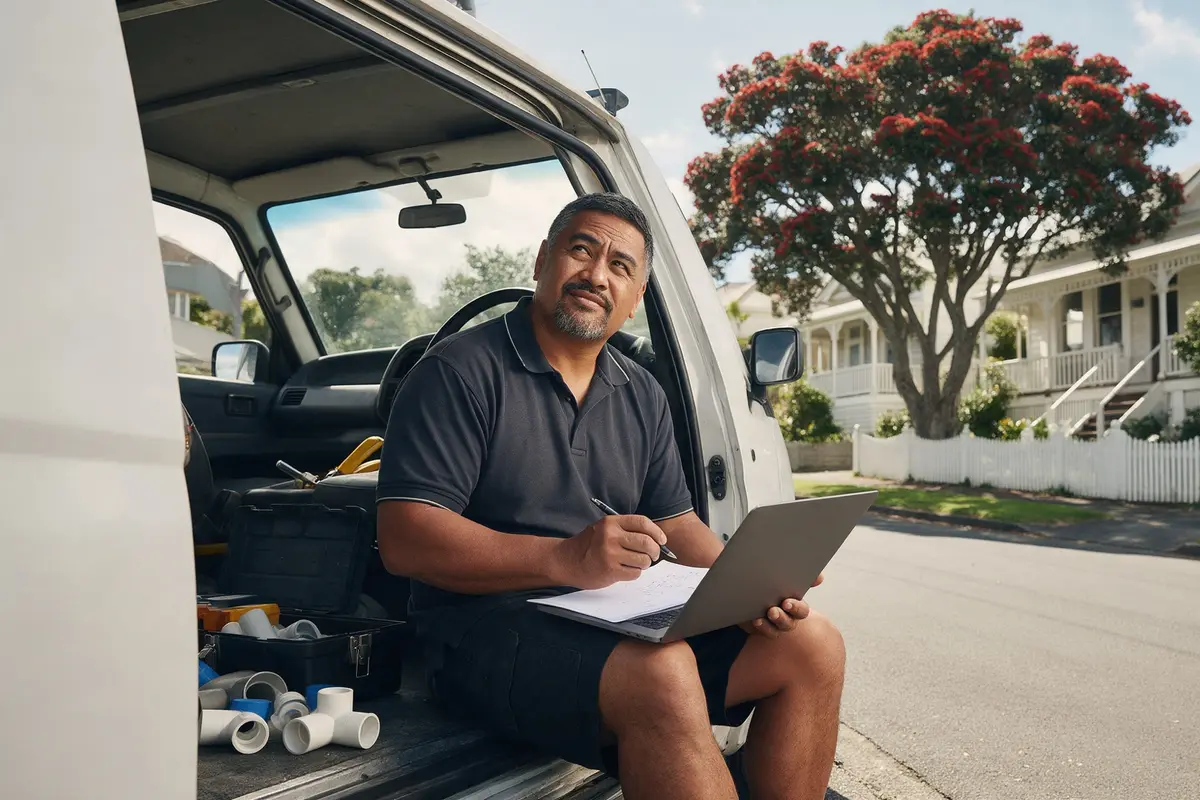
Take an Auckland plumbing firm with a couple of vans on the road. Deposits come in weekly from residential and small commercial jobs, with a dip each January. The lender looks past the busy pre-Christmas weeks, focuses on the typical month and the January dip, and sizes the loan to suit. A longer term lowers each repayment, which can lift the amount that fits, at the cost of more total interest.

How much can you borrow against property?
For a 1st or 2nd mortgage for business, the maths starts with equity: what the property is worth minus what’s already owed on it.
Each lender sets its own maximum combined lending limit, expressed as a share of the property’s value. It varies by property type, location and lender. Purely to show how the maths works, here’s an illustrative example using a made-up limit.
| Illustrative figures | |
|---|---|
| Property value (Tauranga home) | $1,100,000 |
| Lender’s combined limit (example only: 70% of value) | $770,000 |
| Existing bank mortgage | $600,000 |
| Room available for a 2nd mortgage | $170,000 |
In this example, the owner could potentially raise up to $170,000 behind the existing bank mortgage, without touching it. Actual limits differ, and the valuation the lender relies on may differ from what you think the property is worth. Try your own numbers in the equity calculator.
The big advantage here: LoansOne’s 1st and 2nd mortgages need no cash flow or financial records, and bad credit is OK. So a business with lumpy trading or accounts two years behind can still borrow a meaningful amount if the equity is there. Our page on borrowing against your house for business covers the pros and cons in more depth.
How much can you borrow with asset finance?
With asset finance, the asset does most of the talking. Lenders consider what it’s worth, how quickly it loses value, whether it’s new or used, and how easily it could be resold. A late-model ute or a popular excavator is easy to value and resell. Specialised one-off machinery is harder, so lenders may want a larger deposit or extra security.
A trade-in or cash deposit reduces the amount financed and can sharpen the deal.
What else affects how much you can borrow?
Beyond the main yardstick, these all move the number up or down:
- Credit history. Recent defaults can lower an unsecured limit. On property-secured loans they matter much less.
- IRD arrears. Lenders treat these as a commitment, though the loan is often used to clear them.
- Existing debts. Other business loans, leases and merchant cash advances all eat into what cash flow can carry.
- Loan term. Longer terms mean smaller repayments, which can support a bigger loan through cash flow.
- Purpose and exit. A clear plan for repayment, such as a property sale or contract payment, can support a larger short term loan.
- Industry and seasonality. Lenders allow for quiet months in seasonal businesses like tourism, farming and hospitality.
How can you borrow more, or the right amount?
- Add security. Property equity can support far more than cash flow alone.
- Clean up your banking. Run all business income through one account, and avoid dishonours for a few months before you apply.
- Clear small, expensive debts. Consolidating them frees up cash flow for a larger, better-structured loan.
- Use the right product for the asset. Fund vehicles and machinery through asset finance and keep cash flow lending for working capital.
- Choose a sensible term. Our business loan calculator shows how term changes repayments.

Putting it together: a worked example
Picture a Hawke’s Bay orchard contracting business that runs pruning and picking crews across Hastings and the Heretaunga Plains. The owner needs $220,000: a used tractor and hydraulic platform, plus wages to carry the crews through the weeks before growers pay at the end of harvest.
Looking at it through each yardstick:
- Cash flow. Deposits are strong from February to May and thin in winter. An unsecured lender sizes the loan around the quiet months, which supports only part of the need.
- Asset value. The tractor and platform hold their value well, so asset finance can fund most of their cost on its own security.
- Equity. The owner has a Havelock North home with a modest bank mortgage. A 2nd mortgage behind it could cover the wage gap without relying on winter trading at all.
The right answer is often a combination, sized so each part matches what backs it. That’s the kind of structure an expert works through with you, rather than forcing the whole amount into one product that doesn’t fit.
Should you borrow the maximum you’re offered?
Not automatically. Borrow enough to solve the problem completely, with a modest buffer, and no more. Excess borrowing costs interest on money that sits idle. Too little and you’ll be back for a top-up, often paying extra fees along the way.
The real test is whether the repayments fit your quietest months, not your busiest. The cash flow gap calculator helps you map that before you commit.
What if you need close to $500,000?
Larger amounts usually need stronger evidence: very consistent cash flow for an unsecured loan, or solid equity for a mortgage. Many owners combine the two. Our $500,000 business loan page covers the options at the top of the range.
How LoansOne helps you get the right amount
An expert reviews every application on your individual circumstances, works out which yardstick suits you best, and matches you to the lender most likely to fund the amount you need. Your details aren’t shopped around to dozens of lenders, and starting an enquiry won’t mark your credit file. Every loan is priced on your situation, and we work to get the sharpest rate available for it.
Next step
Want a real number rather than a guess? Apply in about 30 seconds and an expert will tell you what’s realistic for your business, or call 09-888 5252.