
The short answer
A $50,000 business loan in NZ is usually easiest to get unsecured, assessed on your business bank statements rather than property. If trading history is short or credit is patchy, a 2nd mortgage or asset finance can work instead. With documents ready, next-day funding is possible in many cases. LoansOne arranges $20,000 to $500,000.
What do NZ businesses use a $50,000 loan for?
$50,000 is the sweet spot for a lot of Kiwi small businesses. It’s big enough to make a real difference, and small enough that most lenders can make a fast decision without a lot of paperwork.
Here’s where a $50,000 business loan typically goes:
- A key piece of equipment. A commercial espresso machine, a second-hand digger attachment, a new oven, a cool room.
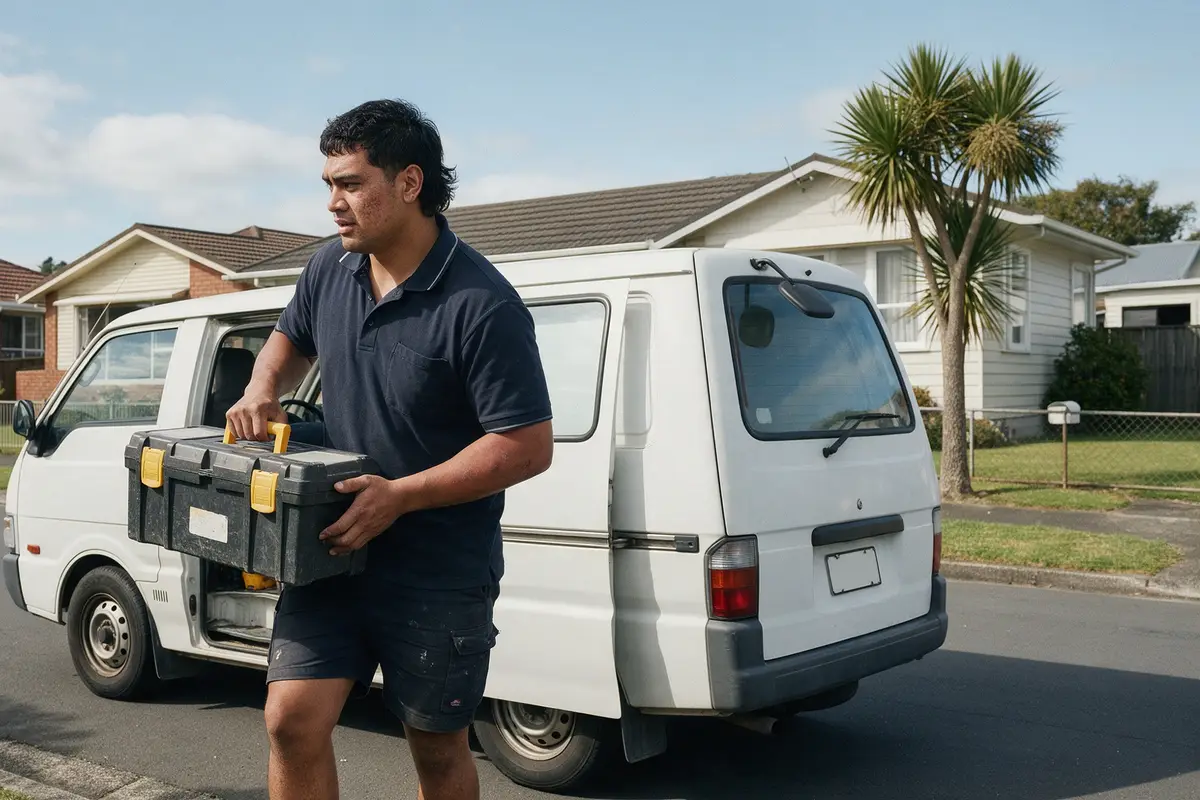
- A work vehicle. A used ute or van, or the deposit on a newer one.
- Stock before a busy season. Retailers loading up before Christmas, garden centres before spring.
- A tax bill. Clearing a GST, PAYE or provisional tax payment before penalties and interest start building.
- Covering a cash flow gap. Wages and suppliers while a big customer takes 60 days to pay.
- A refresh. New signage, a website rebuild, or a small fit-out upgrade.
- Marketing a new service. Funding a campaign that needs to run before the revenue arrives.
What these have in common: the money is spent on something that pays its way, and the loan can usually be cleared over a short to medium term.
Which loan type fits $50,000 best?
At this size, you have options. The right one depends on what you’re buying, how long you’ve been trading and whether you own property.
| What you’re funding | Usually the best fit | Why it works at $50,000 |
|---|---|---|
| Working capital, stock, tax bills, marketing | Unsecured business loan | Fast, no property needed in most cases, assessed on cash flow |
| A ute, van or piece of equipment | Asset finance | The asset is the security, so terms can be sharper |
| Need it urgently, books are behind or credit is patchy | 2nd mortgage | No cash flow or financial records needed, bad credit considered |
| Ongoing ups and downs rather than a one-off cost | Business line of credit | Draw what you need, repay, redraw |
For most trading businesses, an unsecured loan is the first port of call at $50,000. It keeps your home out of the deal and is usually quick.
What do lenders look at for a $50,000 loan?
The good news is that $50,000 doesn’t usually trigger the deep-dive assessment that bigger loans do. For an unsecured loan, lenders mainly want to see:
- Recent business bank statements showing regular income.
- How long you’ve been trading. A few months of history through a business account goes a long way.
- Existing debts and repayments, to make sure a new loan is affordable.
- Your IRD position. Arrears aren’t necessarily a deal-breaker, especially if part of the loan clears them.
- Credit history, for the business and the owners.
Full financial statements are often not needed at this size. If you’re a sole trader or a small company with tidy bank statements, that’s frequently enough to get a decision.
For a 2nd mortgage, the lender is focused on the property and your equity in it rather than your trading figures.
How do you get $50,000 fast?
Speed at this size comes down to preparation. Here’s how to make a $50,000 application move as quickly as possible:
- Get your bank statements ready. Recent statements for your main business account are the single most useful document.
- Know exactly what the money is for. “$32,000 for a used Hilux and $18,000 for winter wages” reads better than “general purposes”.
- Have ID and business details handy. Driver licence or passport, NZBN or company number, IRD number.
- Be upfront about any issues. An IRD arrangement, a past default, a quiet month. Lenders handle these all the time; surprises slow things down.
- Apply once. Starting an enquiry with LoansOne doesn’t mark your credit file, and an expert matches you to the right lender instead of sending your details everywhere.
With that in place, next-day funding is possible in many cases. For more on speed, see fast business loans.
What could $50,000 look like in practice?
These are illustrative scenarios, not real clients, but they reflect the kinds of situations we see at this loan size.
A Wellington café, winter. Foot traffic drops when the southerlies roll in, but rent and wages don’t. The owner also needs to replace a tired espresso machine. A $50,000 unsecured loan covers the new machine and smooths out the wage bill until summer trade picks up.
A Hamilton plumbing business, growth. Two plumbers are booked out three weeks ahead. The owner wants a second van, tools and an apprentice. Asset finance funds the van, and a smaller unsecured loan covers the tools and the apprentice’s first months.
A Napier boutique, pre-Christmas. The owner wants to buy deeper stock ahead of the summer visitor season. $50,000 funds the stock order in September, and the loan is paid down from the extra summer sales.
A Northland contractor, tax time. A good year brings a bigger-than-expected terminal tax bill. Rather than draining working capital, the contractor uses a $50,000 loan to pay Inland Revenue on time and spreads the cost.
Secured or unsecured: which makes more sense at $50,000?
Both work at this size, so the choice usually comes down to three things: speed, paperwork and how you feel about using property.
Choose unsecured when:
- your business has been trading for a while through its own bank account,
- you’d rather keep your home out of the deal,
- the purpose is short term, such as stock, wages or a tax bill.
Choose a 2nd mortgage when:
- your financials are behind or your income is hard to read from bank statements,
- your credit file has defaults or arrears on it,
- you want to keep the business account clear of extra lending checks,
- you need the money in a hurry and have equity in property.
Secured loans generally price more sharply than unsecured ones because the lender’s risk is lower. But unsecured loans keep your property free. For a full side-by-side view, see our comparison of unsecured business loans vs second mortgages.
Can a new business borrow $50,000?
It’s harder without trading history, but not impossible. Most unsecured lenders want to see the business has traded through its own account before they lend. A brand-new business usually needs security, such as equity in a home, or asset finance for a specific vehicle or piece of equipment. Our page on startup business loans sets out the realistic paths.
Is $50,000 the right amount to borrow?
Borrowing too little can be as much of a problem as borrowing too much. If you take $35,000 when the job really needs $50,000, you may end up back for a second loan a few months later, which costs time and money.
Before you apply, it’s worth:
- adding up the full cost, including GST, freight, installation and a buffer,
- checking how long the money needs to last before it pays for itself,
- running repayments on different terms through our business loan calculator.
If you find the real number is closer to six figures, have a look at our page on a $100,000 business loan, where the options and the lender’s checks shift a little. For a broader view of funding for smaller operators, see small business loans.
How is a $50,000 loan priced?
Every loan is priced on your individual circumstances. The main factors are whether the loan is secured or unsecured, how long you’ve been trading, the strength of your bank statements, your credit history and the term you choose. We don’t quote one rate for everyone. Instead, an expert matches you to the lender best suited to your situation and works to get you the sharpest rate available.
Next step
$50,000 is one of the fastest loan sizes to get approved when you’re prepared. Starting is free, takes about 30 seconds and doesn’t mark your credit file. Apply in about 30 seconds or call 09-888 5252 to talk it through with an expert today.