The short answer
Yes, many New Zealand business owners with bad credit still get funded. Banks usually decline, but non-bank and private lenders look past the score at security, cash flow and the reason behind the credit issue. Property-secured loans such as second mortgages are the most forgiving, and a clear explanation of what went wrong helps a lot.
Can you get a business loan with bad credit in New Zealand?
Yes, plenty of Kiwi business owners with bad credit get funded every week. What changes is where the money comes from and what the lender asks for in return.
The main banks run tight, automated credit rules. A default, a judgment or a messy few months of bank statements can trigger a decline before a person ever reads your file. Non-bank and private lenders work differently. They read the story behind the credit report, and they put more weight on security, cash flow and your plan to repay.
So the better question isn’t “can I get a loan with bad credit?” It’s “which lender suits my kind of bad credit, and what can I offer them?” That’s what this guide answers. If you want the product view instead, see our page on bad credit business loans.
What does “bad credit” actually mean to a lender?
Bad credit isn’t one thing. A lender reads a late phone bill very differently from an undischarged bankruptcy. Here’s how the common issues tend to be viewed by non-bank lenders.
| Credit issue | How lenders tend to read it | Most realistic route |
|---|---|---|
| A few late payments, no defaults | Minor, especially if recent months are clean | Unsecured or secured, both possible |
| One paid default, over a year old | Common and explainable | Unsecured possible, secured easier |
| Several or unpaid defaults | Higher risk, needs a clear reason | Property-secured loan |
| Court judgment | Serious until satisfied | Property-secured loan, often clearing the judgment |
| IRD arrears | Urgent, because Inland Revenue has strong recovery powers | Loan that pays IRD directly |
| Discharged bankruptcy | Depends on time since discharge | Property-secured loan |
| Recent failed company | Lenders look hard at what you learned | Secured loan with a strong plan |
A few facts worth knowing about New Zealand credit files:
- A default generally stays on your file for five years from when it was recorded, even once paid.
- Repayment history is held for about two years, so recent good behaviour starts showing quickly.
- A single bankruptcy is usually held for four years after discharge.

Why does the bank say no when a private lender might say yes?
Banks lend at scale, so they lean on credit scoring and standard rules. If you fall outside the box, the answer is often a quick no, or a slow maybe that drags on for weeks.
Private and non-bank lenders take on files the banks pass over. They price for that extra risk, and they’re prepared to look at:
- The security. Equity in a house, a commercial building or land gives the lender a fallback, which makes your credit history less critical.
- The reason. A default from a divorce, a health scare or a customer going bust reads very differently from a pattern of ignoring bills.
- What’s changed. Clean bank statements for the last six months tell a lender the problem is behind you.
- The exit. How the loan gets repaid: trading income, a property sale, or a refinance back to a bank once your file has recovered.
If a bank has already turned you down, our guide on what to do when the bank declines your business loan walks through the next moves.
Secured or unsecured: which route works with bad credit?
This is the biggest decision you’ll make, and it usually comes down to whether you own property.
Property-secured loans are the most forgiving. A second mortgage sits behind your existing bank loan, so you keep your bank mortgage untouched and borrow against the equity above it. LoansOne arranges fast, flexible 1st and 2nd mortgages for business purposes from $20,000 to $500,000, with no cash flow or financial records needed, and bad credit is OK.
Unsecured loans need no property, but the lender is relying almost entirely on your trading. Unsecured business loans from $20,000 to $500,000 can work with bad credit when the issues are older or minor and your bank statements show steady income.
| Property-secured | Unsecured | |
|---|---|---|
| Tolerance for bad credit | High | Moderate |
| Paperwork | Light, no financials needed in many cases | Business bank statements |
| Typical speed | Fast, depends on title and valuation | Very fast |
| Best for | Serious credit issues, larger amounts | Minor or older issues, no property |
For a deeper side-by-side, see secured vs unsecured business loans.
What will a lender want to see if your credit is bad?
Have these ready and you’ll save days of back and forth:
- Photo ID for every director or owner
- Your NZBN or company details from the Companies Office
- The last three to six months of business bank statements (for unsecured loans)
- Property details if you’re offering security: address, the current bank mortgage balance, and rates or a recent valuation if you have one
- A short, honest note explaining each credit issue
- What the money is for and how it gets repaid
Not sure if you’re ready? Run through our loan readiness check first.
How do you explain bad credit to a lender?
Most declines with bad credit come from silence, not the credit issue itself. A lender who finds an unexplained judgment assumes the worst. A lender who reads a clear explanation up front can work with it.
Keep your explanation to a few lines per issue:
- What happened. “A major customer went into liquidation owing us money in 2024.”
- What you did about it. “We set up an arrangement and paid the supplier in full.”
- What’s different now. “We now take deposits on large jobs and use credit insurance.”
Don’t hide anything. The lender will run its own checks before formal approval, and anything you left out damages trust far more than the issue itself.
A worked example: Hamilton earthmoving contractor
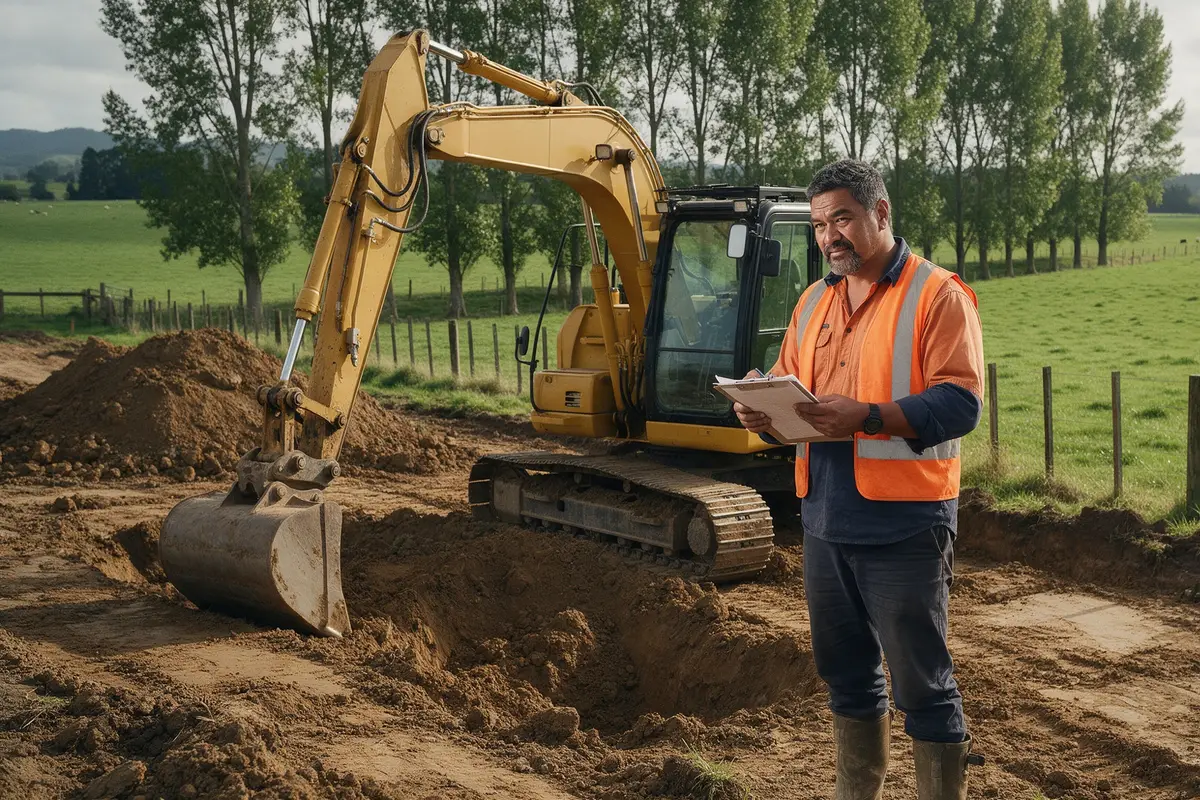
Picture a Hamilton earthmoving contractor with two diggers and a truck. A big subdivision developer paid late two years ago, a fuel card went to collections, and there’s now a paid default on file. The bank won’t extend his facility, and he needs $85,000 to cover a provisional tax bill and fix a machine before the spring rush.
He owns his home in Te Awamutu with solid equity above the bank mortgage. Rather than fight the bank, he takes a second mortgage for business purposes. The lender looks at the equity, his explanation of the default and his plan to repay from summer contract income. No financial statements needed. The bank mortgage stays exactly as it was.
This is an illustrative scenario, not a real client, but it reflects how bad credit files often get solved: security plus a clear story.

How much can you borrow with bad credit?
With bad credit, the amount is driven far more by your security and cash flow than by the credit issue itself.
- Property-secured loans are sized mainly on equity: the property’s value, minus what you already owe on it, with a buffer the lender keeps for safety. Use the equity calculator to get a rough idea before you apply.
- Unsecured loans are sized on your trading. A lender reads your bank statements, works out what the business can comfortably repay each week or month, and sizes the loan from there.
Bad credit tends to affect the price and the structure more than the ceiling. You might be asked for a shorter term, a guarantee from a director, or property security where a cleaner file wouldn’t need it.
Can a newer business with bad credit get a loan?
It’s harder, because the lender has neither a long trading record nor a clean credit file to lean on. Security becomes the deciding factor. An owner who has run a business for six months but owns a home with good equity can often get a property-secured loan. An owner with no property, no trading history and fresh defaults will find it very hard anywhere, and should be wary of any lender who says otherwise.
If that’s you, the most useful step is often to build three to six months of clean bank statements and deal with the worst credit issues first. Then come back with a stronger file.
What mistakes make bad credit worse when you apply?
- Applying everywhere at once. Each formal application can leave an enquiry on your file. A burst of them signals desperation. LoansOne doesn’t shop your file around to dozens of lenders; we match you to the one that fits.
- Borrowing too little. Asking for less than you need to look safer leaves you short, and coming back a month later is harder.
- Ignoring IRD. Tax arrears grow with penalties and interest. If that’s your situation, look at a loan to clear IRD debt before it escalates.
- Leaving defaults unpaid. A paid default is still on file, but it reads far better than an open one.
Once you’re funded, start rebuilding. Our guide to improving your credit score covers the business-owner steps that make the next loan cheaper.
Next step
Bad credit narrows your options, it doesn’t end them. Tell us what happened, what you need and what you own, and an expert will review your situation and match you to the right lender. It’s free, it doesn’t mark your credit file, and you can apply in about 30 seconds. Prefer to talk it through? Call 09-888 5252.