The short answer
Business loans for builders in NZ cover the gap between paying for materials, labour and plant and receiving progress payments. Builders and tradies commonly use unsecured or cash flow loans from $20,000 to $500,000 for working capital, equipment finance for utes and machinery, and 1st or 2nd mortgages for larger needs.
Why do builders and tradies run short of cash?
Most construction businesses aren’t short of work. They’re short of cash at the wrong moment. You buy timber, cladding and fixings up front, pay your crew every week and keep the plant fuelled, then wait for the client to approve and pay your claim. On larger jobs you might wait weeks.
The common pressure points for Kiwi builders and trades:
- Progress payments: under the Construction Contracts Act, you claim as work progresses, but the money lands well after you’ve spent it.
- Retentions: head contractors can hold back a portion of each payment. Since October 2023 that money must be held on trust, but it’s still out of your hands until release.
- Materials: supplier accounts are often due on the 20th of the following month, sometimes before your claim is paid.
- Wages and subbies: labour gets paid weekly, whatever the client’s payment cycle.
- Tax: GST at 15% on invoices you haven’t been paid for yet, plus PAYE and provisional tax.
- Slow or failed payers: one late client can stall three jobs.

What do construction businesses typically fund?
- Materials and supplies for a large job or a run of jobs
- Wages, subcontractors and labour hire through a slow month
- A new or second ute, van or truck
- Excavators, diggers, scaffolding, formwork and tools
- Yard, workshop or office premises
- An IRD debt that built up during a busy period
- Deposits on bigger contracts, or taking on a job that needs cash before the first claim
Which LoansOne options fit a building business?
| Need | Best-fit option | Why it works |
|---|---|---|
| Materials and wages until a claim is paid | Unsecured business loan or cash flow loan | Fast, no property needed, $20,000 to $500,000 |
| Ongoing gap from long payment cycles | Working capital loan | Sized to your claim cycle |
| Excavator, plant, utes | Machinery finance | The asset secures the loan |
| Larger sum, credit issues or no recent accounts | 2nd mortgage | No cash flow or financial records needed, bad credit OK |
| Bank too slow on a property-backed facility | 1st mortgage | Fast private alternative, $20,000 to $500,000 |
Pricing depends on your trading, security, term and the purpose of the funds. Every loan is priced on your circumstances, and the team works to get the sharpest rate available for your situation.
Illustrative example: a Hamilton earthmoving contractor
This is an illustrative scenario, not a real client.
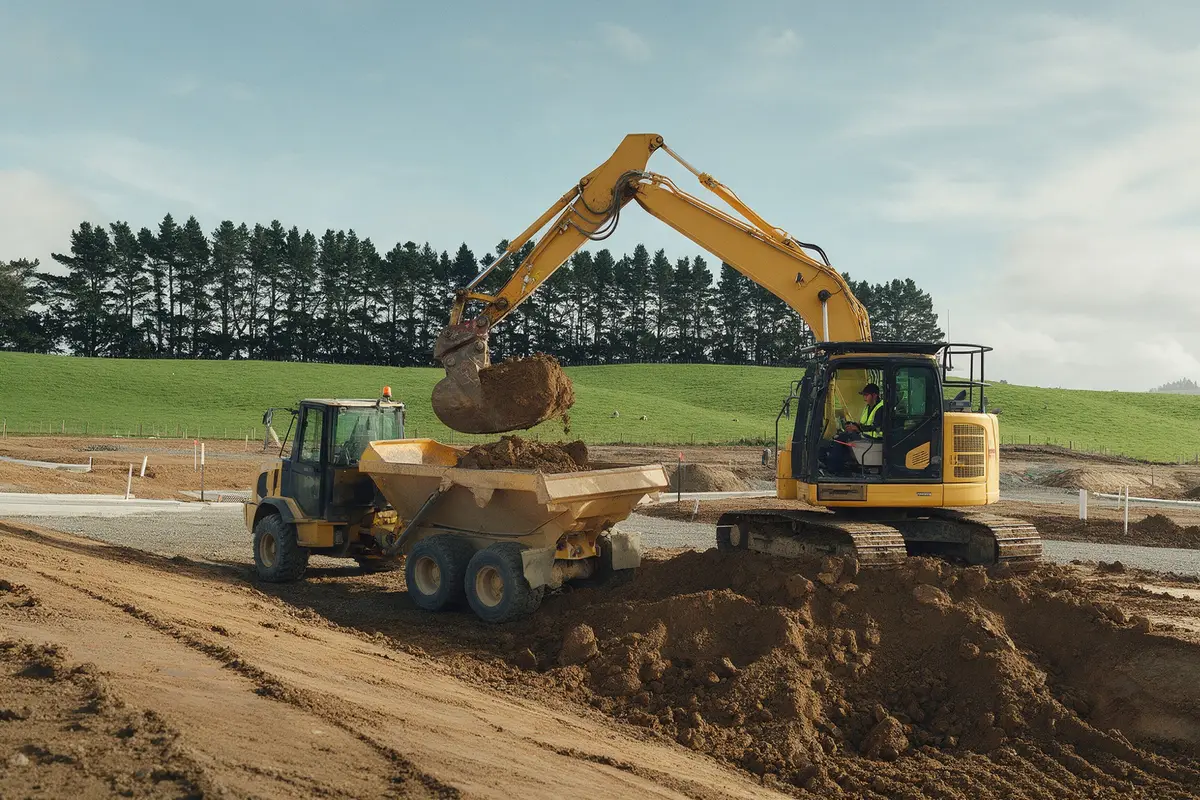
A Hamilton earthmoving contractor wins a subdivision job that will keep two machines busy for four months. The work is great, but the first progress claim won’t be paid for six weeks, and the job needs extra fuel, an additional operator and a hired roller from day one. On top of that, a provisional tax instalment is due.
The bank wants updated annual accounts that are still with the accountant. Instead, the owner applies online, and an expert reviews the bank statements, the signed contract and the machines owned outright. The contractor is matched to a lender offering an unsecured working capital loan to carry the job through to the first claim, with machinery finance considered separately for a new compactor. Once claims start flowing, the working capital loan is paid down.
How do lenders assess a construction business?
Private lenders look at what’s actually happening in your business:
- Recent bank statements: regular claims landing and steady turnover count for a lot.
- Pipeline: signed contracts and a forward work list show where repayments come from.
- Debtors: who owes you and how reliably they pay.
- Assets: utes, machinery and property you own can support secured lending.
- Tax position: IRD arrears aren’t automatically a deal-breaker, especially if part of the loan clears them.
If your credit isn’t perfect or your accounts are behind, property-backed lending is often the cleanest path. The business loan calculator helps you check repayments against your claim cycle before you apply.

Unsecured loan or 2nd mortgage: which suits a building business?
Both can fund the same job. The difference is what the lender relies on.
An unsecured loan leans on your trading. If your bank statements show regular claims landing and your pipeline is solid, it’s usually the fastest route, and your house stays out of it. It suits short gaps: a materials run, a slow-paying client, a month of wages.
A 2nd mortgage leans on property. It sits behind your existing bank mortgage, so your bank lending stays untouched, and it doesn’t need cash flow or financial records. That makes it a strong fit when:
- your annual accounts are a year or more behind, which is common in the trades
- a past job went bad and left a mark on your credit file
- you need a larger sum than your trading alone supports
- you’re clearing IRD arrears and want one clean repayment
For a side-by-side view, see unsecured business loan vs second mortgage.
What should a tradie have ready before applying?
You don’t need a business plan or a stack of forms to start. Having these to hand speeds up the lender’s decision:
- three to six months of business bank statements
- a list of current jobs and signed contracts, with expected claim dates
- details of any utes, plant or property you own, and what’s owing on them
- your IRD position, including any arrangement in place
- for equipment, the quote or invoice from the seller
Sole traders can apply too. Our page on sole trader loans covers what changes when the business is just you.
How can builders use finance without overstretching?
- Match the term to the gap. A six-week claim gap doesn’t need a five-year loan.
- Keep plant on asset finance so working capital stays free for labour and materials.
- Price jobs to include your finance cost, the same way you price in materials.
- Clear tax debt early. Penalties and interest keep building while it sits.
- Run the numbers with the cash flow gap calculator before you commit to a big job.
Next step
If a progress payment, a retention or a big materials order is squeezing your cash, check your options now. Apply in about 30 seconds, free, with no mark on your credit file. An expert reviews your application and matches you with the right lender. Or call 09-888 5252 to talk it through.